How IP65 Vehicle-Mount Tablets Support Fleet Operations
Vehicle-mount computing isn’t about bolting a tablet to a dash—it’s about ensuring consistent, reliable data access for drivers, field technicians, and dispatch coordinators who depend on real-time visibility while moving. The Onerugged ecosystem includes purpose-built devices like the Emdoor EM-V10J, which reflects practical trade-offs made for in-vehicle deployment—not lab benchmarks or theoretical specs.
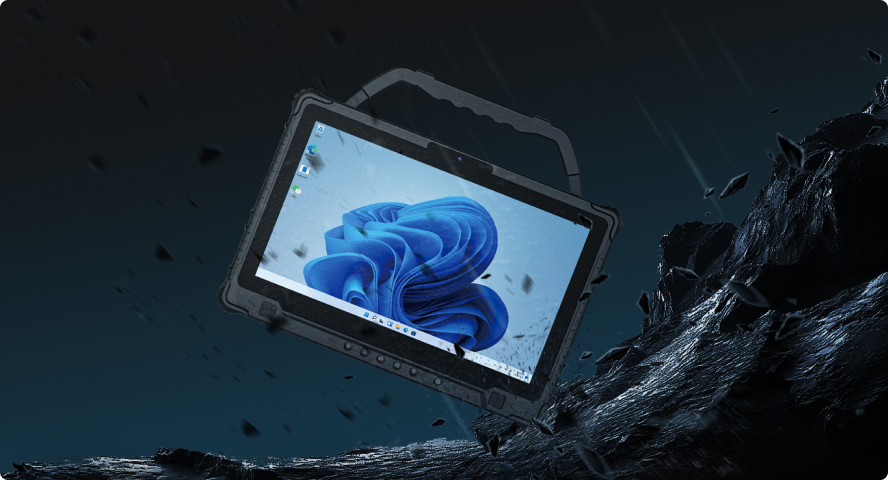
Fleet Dispatch Coordination with IP65 Sealing
IP65 isn’t overkill for fleet use—it’s baseline. Dust ingress from loading docks, roadside gravel, and cargo bay airflow is constant. Occasional water exposure happens during rain-soaked door openings, high-pressure washdowns near maintenance bays, or even condensation buildup in humid climates. The EM-V10J’s IP65 rating means sealed front bezel and gasketed I/O ports hold up without requiring custom enclosures or third-party retrofit kits—reducing both integration time and long-term service calls.
In-Cab Data Entry with 1000 Nits Sunlight Readability
A 1000-nit display doesn’t mean ‘brighter is always better.’ It means legibility at noon on a south-facing windshield, under glare conditions where consumer tablets (typically 400–500 nits) go dark or require shading. The 10.1-inch IPS panel maintains contrast and touch accuracy across wide viewing angles—critical when drivers glance briefly while maintaining road awareness. No auto-brightness hunting, no manual brightness toggling mid-route.

Why 1.22m Drop Resistance Matters in Real Cab Environments
Drop testing isn’t abstract. It mirrors how these units get handled: slid off a mounting arm during tight turns, jostled loose during pothole impacts, or accidentally nudged off a console by gear or tools. The 1.22m rating covers typical cab-height drops onto rubber-mat or composite flooring—not concrete, but not padded either. That reliability directly reduces unplanned replacements and avoids workflow interruptions during shift handovers.
Real-Time Asset Tracking with Multi-Satellite GNSS
GNSS performance here isn’t about raw satellite count—it’s about consistency across urban canyons and rural corridors. Built-in u-blox 7 supports GPS + GLONASS, enabling faster time-to-first-fix and tighter positional confidence than single-constellation modules. When paired with optional 4G LTE and dual-band Wi-Fi, location updates stay current even during brief signal loss—no manual re-sync needed. This matters for compliance logging, proof-of-delivery timestamps, and dynamic rerouting.
For teams evaluating hardware that stays powered, connected, and readable across shifts, rugged tablets must balance environmental tolerance with seamless OS integration. Likewise, industrial PC selection hinges less on peak CPU numbers and more on thermal stability across -20°C to 60°C operating ranges—especially inside parked vehicles baking in summer sun or idling in sub-zero depots.
And while IP ratings are often cited, they’re only one part of the durability story: rugged tablets also need M12 connectors for vibration resistance, wide-input DC power (11–24V) for direct vehicle battery tapping, and RS232/RS485 support for legacy telematics gateways—none of which require adapters or external converters.


Comments
Post a Comment