Rugged AI PCs for Industrial Field Work: Intel Core Ultra & MIL-STD-810H
Industrial field teams don’t need more computing power—they need the right computing power, where it matters most: in a vibrating service van, on a rain-slicked loading dock, or inside a dusty maintenance bay. The Onerugged portfolio includes purpose-built devices like the EM-X15M—a 15.6-inch rugged AI PC built for sustained operation under real-world physical and thermal stress. This isn’t a repurposed commercial laptop with a rubber bumper. It’s engineered from the chassis up for AI-accelerated workflows that run locally, reliably, and without cloud dependency.
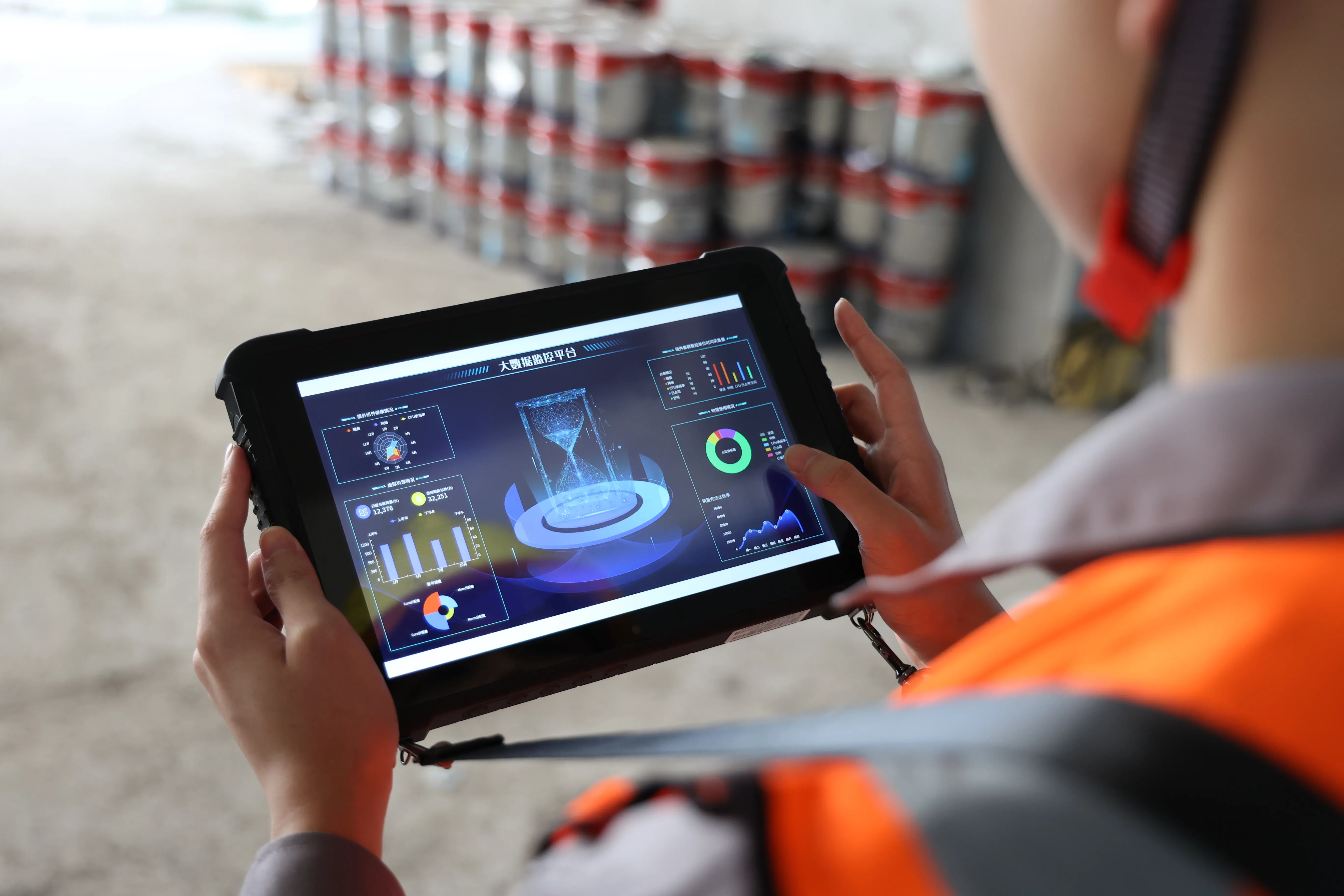
Field Service Dispatch with MIL-STD-810H Certification
MIL-STD-810H isn’t just a checklist item—it’s validation that the device survives repeated shock, vibration, and thermal cycling across shifts. For frontline technicians managing HVAC retrofits, railcar inspections, or municipal infrastructure repairs, this means fewer mid-shift reboots and no surprise shutdowns during a critical diagnostic sequence. The EM-X15M’s compliance covers transit vibration (Method 514.8), operational shock (Method 516.8), and temperature extremes (-20°C to 60°C)—all tested at system level, not just component level.
Why hot-swappable battery matters in mobile service fleets
The dual-battery design—1.5-hour built-in + 8-hour hot-swappable—isn’t about maximizing runtime in a lab. It’s about eliminating downtime during multi-stop routes. A technician swapping batteries between calls doesn’t need a docking station or AC outlet—just a spare pack clipped into the left-side bay. That same bay also supports optional M.2-2280 PCIe SSD expansion, letting teams add local storage for offline schematics, calibration logs, or video-based work instructions without compromising ruggedness.
Warehouse Equipment Calibration with 1000-Nit Display
Calibration tasks often happen near skylights, loading doors, or under high-bay LED fixtures—environments where consumer-grade 300–400 nit screens wash out completely. At 1000 nits, the EM-X15M’s 15.6-inch display remains legible even in direct sunlight or high-glare indoor lighting. Combined with optional glove-touch capacitive input (7H hardness, scratch-resistant), users maintain precision control while wearing standard-issue mechanic or safety gloves—no stylus fumbling or screen tapping retries.

Remote Infrastructure Monitoring with Dual Gigabit Ethernet
Many remote sites—substations, pump stations, wind turbine bases—rely on legacy serial or proprietary protocols alongside modern IP networks. The EM-X15M includes two independent Gigabit Ethernet ports: one full-featured RJ45 (10/100/1000 Mbps), and a second that shares USB2.0 bandwidth but still handles standard TCP/IP traffic. Paired with the RS232 port (9 fully functional lines), this lets field engineers connect directly to PLCs, RTUs, or legacy SCADA hardware without external converters—cutting cable clutter and single points of failure.
AI at the edge, not in the cloud
The Intel Core Ultra 7 155H brings a dedicated NPU (Neural Processing Unit) onboard—not just CPU/GPU acceleration. That matters when running local vision models for bolt pattern verification, thermal anomaly detection in electrical panels, or predictive maintenance scoring using sensor feeds. Since all AI inference happens offline, there’s no latency, no data egress risk, and no dependency on intermittent cellular or satellite links. You’ll find similar architecture principles applied across modern rugged tablets designed for harsh environments.
For deployments requiring deeper integration into existing IT stacks, the device ships with Windows 11 Pro—supporting standard Group Policy, Intune enrollment, BitLocker encryption, and TPM 2.0. Wi-Fi 6 and optional 5G ensure reliable handoff between facility WLANs and wide-area coverage, while Bluetooth 5.1 enables pairing with ruggedized barcode scanners or wireless torque tools. You can explore how these capabilities translate across different site conditions in our deep-dive on industrial PC deployment patterns.
Finally, the 12-pin Pogo Pin interface (optional) isn’t just for charging—it’s a modular expansion path. Teams have used similar interfaces to attach custom sensor modules, CAN bus adapters, or real-time clock boards—all without breaking IP65 sealing. That kind of flexibility makes the EM-X15M less of a ‘computer’ and more of a field-deployable platform. For cost-conscious buyers evaluating alternatives, the D10R offers a compact counterpart with overlapping durability specs but a different balance of screen size, I/O, and AI capability.


Comments
Post a Comment