Rugged Handhelds for Supermarket Inventory with IP68 Sealing
Supermarkets and convenience stores don’t need flashy tech demos—they need hardware that works in the aisle, survives a dropped scan on wet concrete, and stays online during a 12-hour shift. That’s why the Onerugged portfolio—aligned with proven retail deployments like Emdoor’s H68T—focuses on durability, real-world connectivity, and field-validated usability.
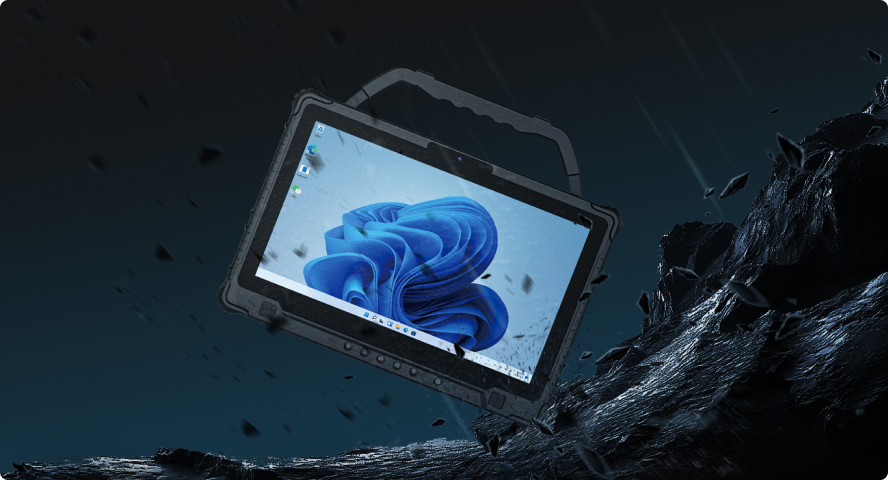
Supermarket Inventory Counting with IP68 Sealing
When staff are counting SKUs across refrigerated aisles, freezer rooms, and damp loading docks, ingress protection isn’t a spec sheet footnote—it’s operational insurance. The IP68 rating means full submersion resistance (up to 1.5 meters for 30 minutes), critical where condensation pools on cold floors or spills happen mid-shift. Unlike IP65 or IP67 units, IP68 eliminates the need to pause work after a spill or avoid scanning near chilled produce sections.
That level of sealing pairs directly with how frontline teams actually move: no protective sleeves, no hesitation before scanning near ice machines or under misting displays. It also reduces cleaning downtime—wiping down with disinfectant wipes or even a quick rinse is safe and routine, not a risk assessment.
Warehouse-to-Aisle Mobility with 1.5m Drop Resistance
Fall protection matters most where it’s least predictable: stepping off a pallet jack, slipping on a wet tile, or fumbling while reaching into a high bay. MIL-STD-810G drop testing at 1.5 meters onto concrete reflects real stockroom conditions—not lab-perfect surfaces. Units with this rating consistently return to service after impacts that would crack consumer-grade devices, cutting unplanned replacements and avoiding mid-shift device swaps that break counting continuity.
Battery life ties directly into this workflow: a 5800mAh cell supports full-shift use without hot-swapping or midday charging carts. That’s not just about uptime—it’s about eliminating cable clutter in narrow aisles and reducing the number of charging stations needed in backrooms already tight on space.
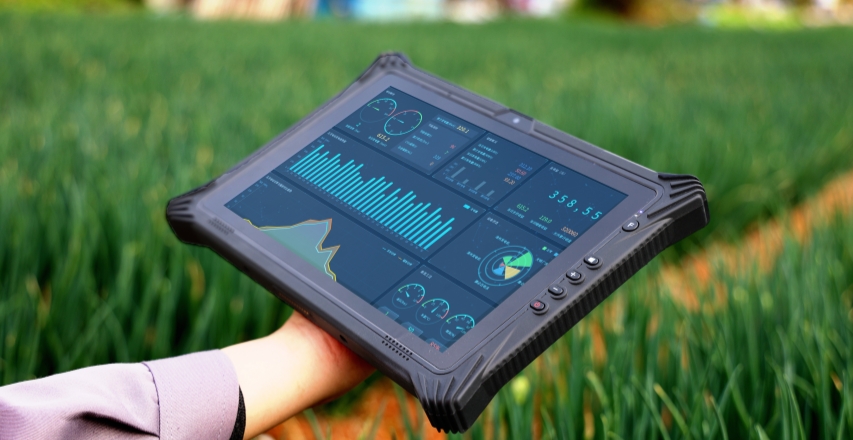
Electronic Shelf Label Updates with Long-Range Scanning
Updating ESLs shouldn’t require ladders, lifts, or dedicated maintenance windows. The optional long-range scanning engine—capable of reading barcodes up to 10 meters away—lets staff update pricing tags from floor level in high-ceiling supermarkets or multi-tier convenience store layouts. This isn’t theoretical range; it’s calibrated for typical retail lighting, label contrast, and ambient glare—no retakes, no repositioning.
Real-time sync over Wi-Fi 6 ensures updates land instantly in the central WMS, closing the loop between price change, shelf execution, and POS accuracy. No batch uploads. No manual reconciliation. Just one consistent price source—across app, shelf, and register.
Frontline User Perspective: Why These Specs Stick
This post is written from Perspective B (The Frontline User). That means zero assumptions about IT policy, MDM tooling, or procurement cycles—and total focus on what’s in the hand, on the belt, and under fluorescent lights at 6 a.m.
- Glove-friendly touchscreen: Capacitive response remains reliable with standard cotton or nitrile gloves—no stylus dependency or screen calibration drift after repeated use.
- Sunlight readability: At 1200 nits, the display cuts through overhead lighting and window glare without needing brightness toggles or shade hoods—critical when verifying labels near storefront glass.
- Ergonomic grip & weight balance: The 6.56-inch Incell screen sits comfortably in one hand during extended counts, and the chassis design prevents wrist fatigue during repetitive scanning motions.
- Physical button layout: Dedicated scan trigger and volume keys are tactile, recessed, and positioned for thumb access—even with gloves on.
None of these features matter if the unit fails three weeks in. That’s why IP68 and 1.5m drop resistance aren’t marketing claims—they’re the baseline for surviving daily retail motion. For teams managing dozens of devices across multiple stores, reliability isn’t a ‘nice-to-have’. It’s the difference between completing a full inventory sweep before opening—and starting the day already behind.
For deeper context on thermal resilience in cold-chain environments, see our analysis on extreme temperatures. To understand how fanless architecture extends lifecycle in dusty stockrooms, refer to our guide on rugged tablets. And for deployment patterns showing how 5G-capable rugged devices reduce long-term support costs, explore our case framework on industrial PC TCO.


Comments
Post a Comment