Rugged Notebook for Field Engineering with ATEX Certification
Field engineers working in hazardous locations—like chemical plants, refineries, or grain handling facilities—need computing hardware that doesn’t just survive the environment but complies with strict safety mandates. The Onerugged rugged notebook line, as reflected in Emdoor’s product categorization, includes models certified to ATEX standards—an essential requirement where flammable vapors, gases, mists, or combustible dusts may be present.

Field Engineering in Hazardous Areas with ATEX Certification
ATEX isn’t optional—it’s regulatory. If your team carries a notebook into Zone 1 or Zone 21, the device must be independently verified to prevent ignition sources: no hot surfaces, no sparking circuits, and intrinsically safe power management. Unlike consumer laptops or even many 'semi-rugged' notebooks, ATEX-certified units undergo rigorous third-party testing—not just for shock or water resistance, but for thermal cutoff thresholds, enclosure sealing integrity under pressure cycling, and electromagnetic compatibility in high-noise industrial settings.
This isn’t about marketing claims. It’s about documentation: every certified unit ships with an EC Type Examination Certificate, clearly listing its equipment protection level (EPL), temperature class (e.g., T4), and gas group (e.g., IIA, IIB). You’ll need those documents during facility audits or when integrating with existing plant safety systems.
Why ATEX Matters More Than MIL-STD or IP Ratings Alone
MIL-STD-810G and IP65 are valuable—but they don’t address explosion risk. A device can be drop-tested, sealed against rain, and thermally stable across -20°C to 60°C, yet still pose a hazard if its battery management circuit lacks intrinsic safety design. ATEX certification layers on top of mechanical durability. That means reinforced battery compartments, non-sparking hinges, and conformal-coated PCBs—even on ports and connectors. You’ll notice the difference during routine maintenance: no exposed screws near high-voltage zones, no vent holes that compromise containment, and interfaces (like USB or serial) designed with galvanic isolation where required.
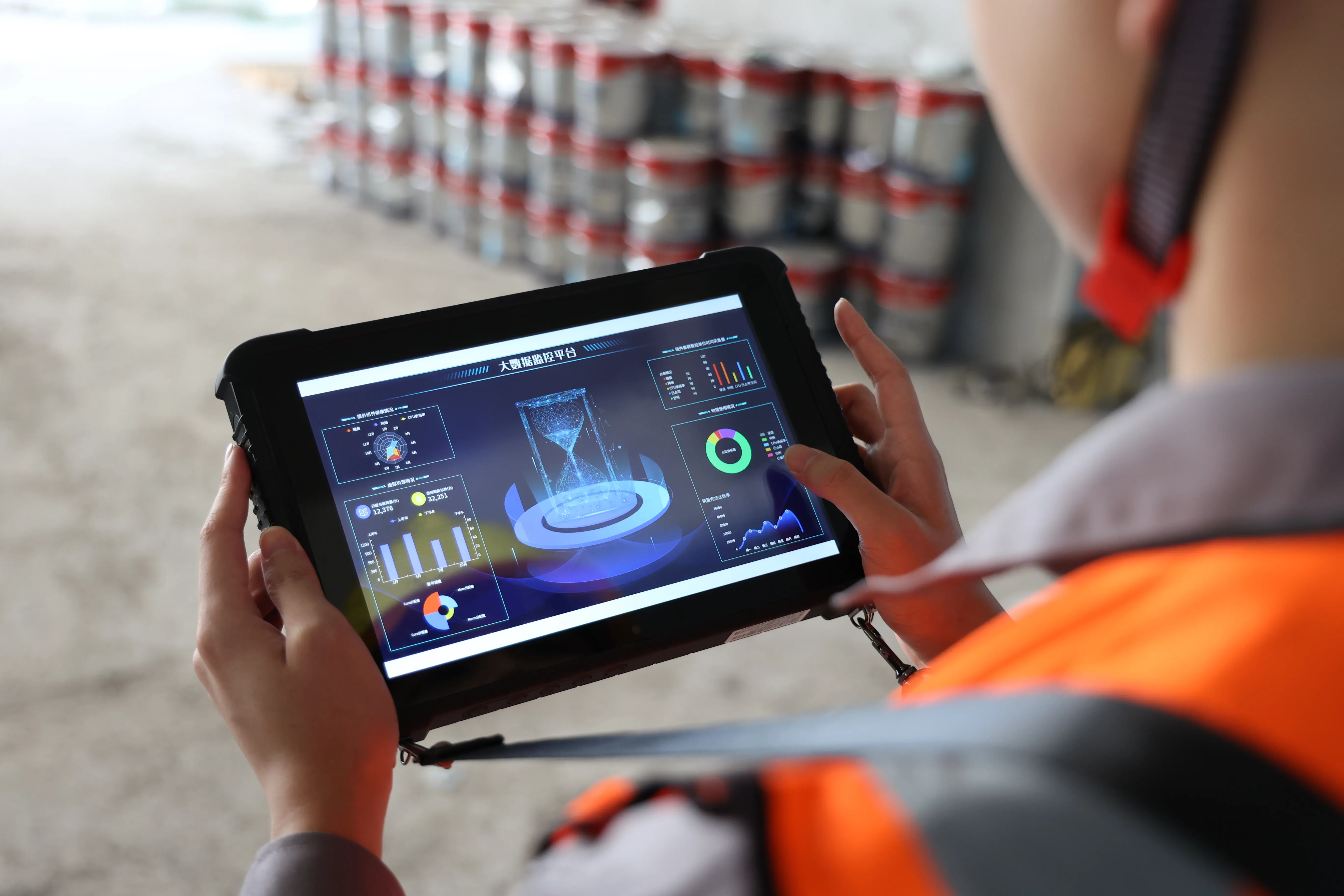
Vehicle Mounting and Outdoor Readability for Mobile Field Work
Many ATEX-compliant notebooks also appear in Emdoor’s 'Outdoor Rugged' and 'Vehicle PC' categories—indicating dual-use suitability. For engineers moving between control rooms, pump stations, and railcar loading bays, sunlight-readable displays (1200 nits or higher) and glove-touch support aren’t conveniences—they’re workflow enablers. You’ll want to verify actual measured brightness (not just 'up to' specs) and confirm touchscreen firmware supports thick winter gloves without false triggering.
Mounting matters too. Vibration resistance isn’t just about surviving transport—it’s about maintaining Wi-Fi 6 or 5G connectivity while mounted in a service vehicle. Look for tested performance across ISO 5044 vibration profiles, not just random drop specs. And remember: ATEX compliance extends to mounting hardware. Clamps and brackets must also be non-sparking and rated for the same zone classification.
Real Deployment Considerations for Procurement Teams
- TCO starts at certification renewal: ATEX certificates have validity periods and require retesting after major component changes—factor in vendor responsiveness and documentation turnaround time.
- Serviceability under compliance: Swapping a failed SSD or RAM module shouldn’t void certification. Confirm whether field-replaceable parts are pre-approved in the certificate scope.
- No workarounds allowed: Using non-certified peripherals (even a standard barcode scanner) inside a classified zone invalidates the entire setup. Stick to bundled, certified accessories—or validate each add-on separately.
For teams evaluating alternatives, our deep-dive on vibration challenges shows how mounting stability affects long-term reliability—and why it’s inseparable from ATEX readiness. Likewise, the rugged AI PC analysis highlights how local inference workloads shift thermal design requirements in hazardous environments. And for extreme ambient conditions beyond ATEX zones—think arctic cold or desert heat—this extreme environmental guide outlines what real-world validation looks like beyond datasheet claims.


Comments
Post a Comment