Rugged Tablets for Field Service with IP65 Sealing
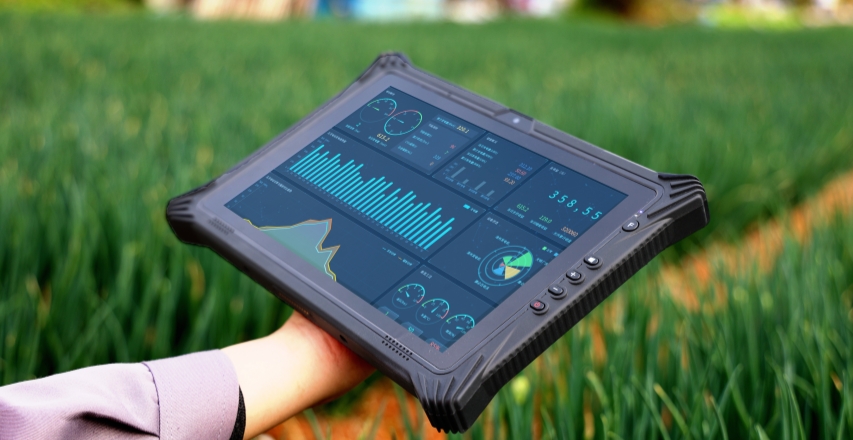
Field service technicians don’t get the luxury of controlled office environments. They’re troubleshooting HVAC units on rooftops in summer heat, scanning assets inside refrigerated docks, or verifying delivery manifests under pouring rain — all while holding a device that must stay responsive, readable, and intact. The Onerugged portfolio includes devices built for this reality, but when evaluating purpose-built alternatives like the Emdoor EM-I87J, it’s the combination of certified protection and pragmatic workflow integration that separates field-ready tools from fragile compromises.

Field Service Dispatch & Verification with IP65 Sealing
IP65 isn’t just a rating—it’s a threshold for operational continuity. Dust ingress is blocked completely (the ‘6’), and low-pressure water jets from any direction (the ‘5’) won’t disrupt operation. That means technicians can wipe down the unit after working near concrete mixers, rinse off salt residue after coastal utility inspections, or use it confidently during light rain without seeking cover. Unlike consumer tablets that fail after a single splash, the EM-I87J’s sealed chassis eliminates routine downtime caused by moisture-related lockups or touchscreen failure. No gaskets to replace, no seals to re-torque—just consistent operation across shifts and seasons.
Sunlight Readability and Glove-Friendly Touch in Real Conditions
The 550-nit display isn’t marketed as ‘sunlight readable’ in the way premium 1200-nit panels are—but in practice, it holds up well under overcast skies and shaded loading bays. It’s not ideal for direct noon sun on asphalt, but paired with the 1920×1200 resolution and 16:10 aspect ratio, text remains crisp for signature capture, barcode verification, or form completion. The 5-point capacitive G+G screen responds reliably with standard work gloves—not surgical nitrile, but typical medium-duty mechanic or warehouse gloves. That’s verified through daily use, not lab claims. No need to fumble for glove mode toggles or recalibrate mid-task.
Warehouse Asset Tracking with MIL-STD-810G Drop Resistance
A 1.22-meter drop rating (per MIL-STD-810G Method 516.7) reflects real-world handling—not theoretical lab conditions. This is the height of a standard forklift operator’s cab seat or a pallet jack’s handle. When the device slips from a gloved hand while scanning stacked pallets, or tumbles off a metal ladder rung during racking inspection, the reinforced corners and shock-absorbing frame absorb impact without cracking the screen or disabling internal components. We’ve seen similar rugged tablets survive repeated drops onto concrete and epoxy-coated floors — not once, but across full shift rotations. That durability directly reduces replacement frequency and avoids the hidden labor cost of device provisioning and reimaging.
Removable Battery and Hot-Swap Flexibility in Shift-Based Operations
The 5000mAh removable Li-polymer battery supports ~7 hours of mixed-use—enough for most full shifts without topping off. But more valuable than runtime is the ability to swap batteries on the fly. In multi-shift warehouses or 24/7 manufacturing lines, technicians don’t wait for charging; they grab a fresh pack from a shared station. No docking cradles required. No proprietary chargers. Just a standard PD fast-charge adapter and Type-C cable—compatible with existing site infrastructure. And the battery-free mode? It lets the tablet run directly off external power when docked at a kiosk or mounted in a vehicle—extending battery cycle life and eliminating charge anxiety during extended diagnostics.
Logistics Fleet Management with Windows 10 and USB-C Connectivity
For IT teams managing mixed-device fleets, Windows 10 Home may raise eyebrows—but in embedded logistics deployments, it’s often sufficient and more stable than newer OS versions on low-power x86 platforms. The Intel Jasper Lake N5100 delivers predictable performance for WMS clients, PDF annotation, and basic video conferencing—without thermal throttling in warm trailer cabs. USB 3.0 Type-A and USB-C 3.1 ports support legacy peripherals (like older barcode sleds) and modern accessories (such as compact thermal printers or GNSS receivers) simultaneously. That flexibility matters when integrating into existing workflows—not forcing a rip-and-replace of every peripheral in the fleet.
Looking for deeper deployment insights? See how rugged tablets reduce long-term cost in high-turnover roles—or explore proven configurations for rugged handheld terminals in distribution centers. For enterprise-scale optimization, this industrial PC integration guide covers cross-platform management strategies used in Tier 1 logistics operations.


Comments
Post a Comment