Rugged Tablets for Hazardous Environments with ATEX Certification
When monitoring air quality, gas levels, or temperature in chemical processing areas, refineries, or paint spray booths, standard tablets fail before the first shift ends. That’s why field teams need hardware built for real-world hazard zones—not just marketing claims. The Onerugged portfolio aligns closely with industrial requirements like those seen in Emdoor’s mobile environmental monitoring deployments—especially where intrinsic safety and reliable data capture are non-negotiable.
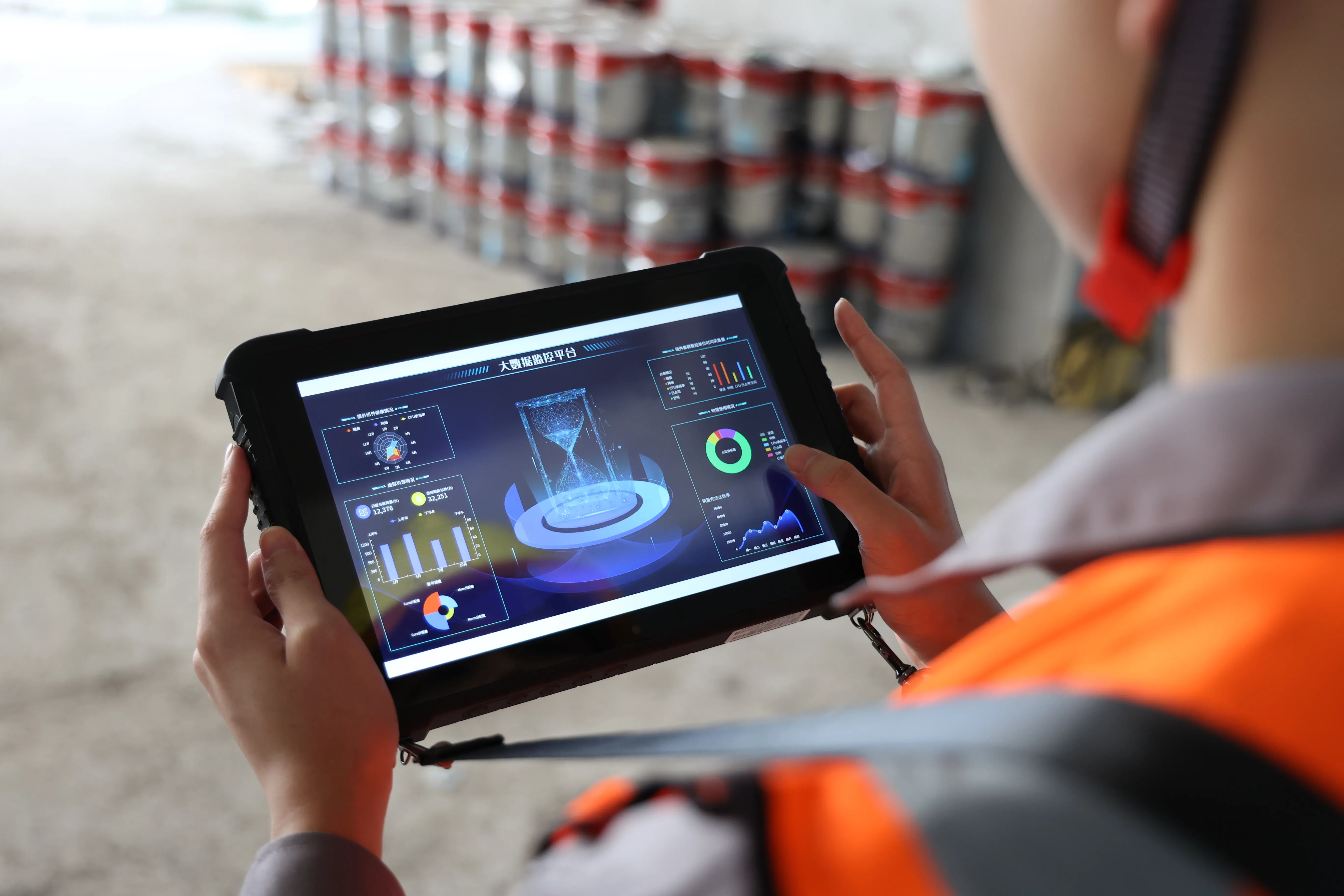
Hazardous Area Monitoring with ATEX-Certified Rugged Tablets
The EM-I17J (EX) rugged tablet isn’t just rated for dust and moisture—it carries formal ATEX certification, meaning it’s been independently verified to operate safely in explosive atmospheres classified as Zone 1 or Zone 2. That’s not a feature you can add via software update or firmware patch. It’s baked into the enclosure design, power management, thermal dissipation, and internal component spacing. For procurement managers evaluating long-term deployment risk, this certification directly reduces liability exposure during audits and simplifies compliance documentation across EU and global facilities.
Why ATEX Matters Beyond the Label
- ATEX isn’t interchangeable with IP67 or MIL-STD-810G—it addresses ignition risk from electrical arcs, surface temperatures, or static discharge. A tablet may survive a drop and stay dry, but still be unsafe in solvent-rich air.
- Certification covers the full device stack: battery, display, touchscreen controller, and even optional peripherals like barcode sleds or RFID readers—if added later, they must also be ATEX-approved as a system.
- Unlike consumer-grade tablets repackaged with rubber bumpers, ATEX units undergo rigorous third-party testing for surface temperature limits under continuous operation—critical when running AI-based environmental analytics in enclosed control rooms or near process lines.
For buyers comparing options, verify whether the ATEX certificate applies to the exact SKU shipped—not just a platform family—and confirm validity for your region’s regulatory framework (e.g., UKCA, IECEx).
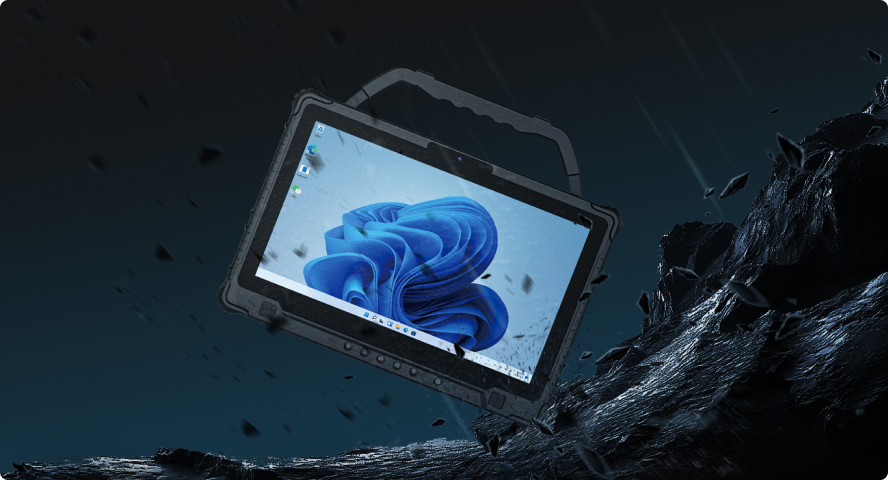
Field Mobility Without Compromise: Sunlight Readability and Glove Touch
Mobile environmental monitoring means moving between indoor control rooms and outdoor bund walls—often in direct sunlight or rain. The EM-I17J (EX) uses a high-brightness display (typically ≥1000 nits), which isn’t just about visibility: it eliminates the need for screen hoods or supplemental lighting that add weight and snag on PPE. Combined with optical bonding and anti-reflective coatings, this ensures legible readings even when wearing safety goggles or thick winter gloves.
Industrial PC Integration for Centralized Environmental Data
While rugged tablets handle spot checks, fixed monitoring relies on robust edge computing. The rugged tablets and industrial PC solutions like the P10J and P15R serve complementary roles—linking sensor networks to MES and SCADA systems via RS232, LAN, or 4G/5G. Their fully enclosed, fanless designs prevent dust ingress in high-particulate environments, and the RK3568-based P15R adds NPU acceleration for local inference on energy usage trends—reducing cloud dependency and latency in time-sensitive alerts.
Vibration and Thermal Resilience in Continuous Monitoring
Mounting a panel PC next to a compressor or HVAC unit introduces constant low-frequency vibration. As covered in our earlier analysis of engine vibration, sustained mechanical stress accelerates solder joint fatigue and SSD wear. Industrial PCs rated to MIL-STD-810G Method 514.7 Cat 24—or equivalent vibration profiles—maintain stable operation over years, not months. That reliability feeds directly into environmental reporting integrity: missing or corrupted data points undermine trend analysis and regulatory submissions.


Comments
Post a Comment