Rugged Tablets for Public Utilities with IP67 Sealing
Public utilities field teams don’t have the luxury of rebooting mid-inspection or swapping out a cracked screen during a storm outage. They need devices that stay functional—rain, dust, vibration, or 5-foot drops on concrete. That’s why IP67 sealing isn’t just a spec sheet checkbox; it’s operational continuity baked into the chassis.
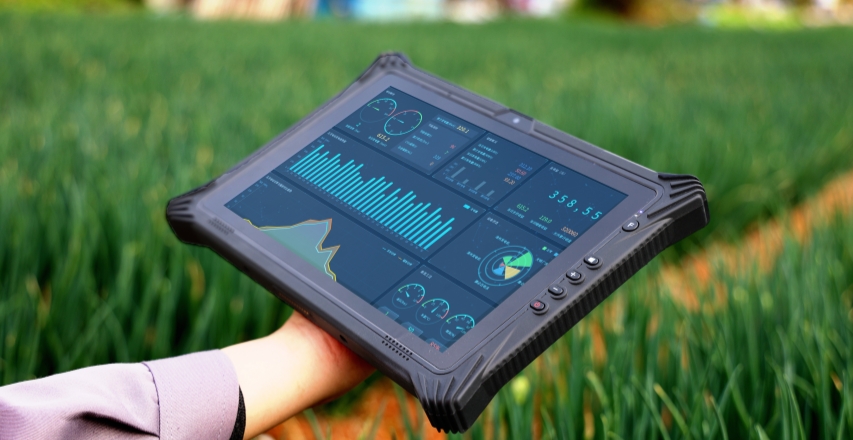
Field Crew Dispatch with IP67 Sealing
When a water main breaks at 3 a.m., crews arrive with tools—not IT support. An IP67-rated tablet survives submersion up to 1 meter for 30 minutes and blocks total dust ingress. That means no shutdowns from mud-caked vents or condensation inside enclosures during humid summer meter reads. It also eliminates the need for secondary protective cases that add weight, reduce screen visibility, and interfere with glove-touch responsiveness.
Substation Maintenance with MIL-STD-810G Shock Resistance
MIL-STD-810G testing covers more than drop height—it validates survivability across temperature extremes, vibration profiles, and mechanical shock common in substation environments. Think mounting on bucket trucks, repeated jostling over gravel access roads, or accidental contact with metal conduit. Devices certified to this standard don’t require recalibration after routine handling—and that directly translates to fewer device swaps per shift and less time spent logging hardware exceptions in CMMS systems.

Why Windows 11 Support Matters for Utility Fleet Rollouts
Many utility asset management platforms now require Windows 11 for driver compatibility with newer IoT gateways and secure boot enforcement. But not all rugged tablets offer native Windows 11 support out of the box—some rely on OEM patches or limited lifecycle updates. Emdoor’s Onerugged line delivers full Windows 11 certification with enterprise-grade TPM 2.0 and UEFI Secure Boot, simplifying MDM enrollment and reducing OS-related deployment delays across large-scale fleet refreshes.
Mobile Workforce Enablement with 1200-Nit Outdoor Readability
Sunlight readability isn’t about peak brightness alone—it’s about sustained legibility under glare while wearing safety glasses or gloves. At 1200 nits, these displays maintain contrast without aggressive auto-brightness hunting, which preserves battery life during multi-hour pole inspections. And unlike consumer-grade panels, the anti-reflective coating stays effective after months of field exposure—not just in lab conditions.
For procurement teams evaluating long-term value, durability specs like IP67 and MIL-STD-810G aren’t overhead—they’re failure rate mitigation. Fewer replacements mean lower per-device TCO over 3–5 years, especially when factoring in labor for device provisioning, reimaging, and helpdesk triage. You’ll find deeper technical context on real-world sealing tradeoffs in our guide to rugged tablets. For utility-specific deployment patterns—including SCADA integration and cellular failover strategies—see our analysis of energy and utilities use cases. And if your team is scaling digital workflows across meter reading, vegetation management, and AMI validation, explore how integrated rugged tablets reduce workflow handoffs between field and back office.


Comments
Post a Comment