Rugged tablets for public utilities with IP65 sealing
Public utilities field teams don’t need flashy specs — they need devices that stay on, stay connected, and stay usable when rain soaks the meter box, dust coats the substation cabinet, or gloves blunt finger dexterity. That’s why IP65-rated rugged tablets are becoming standard issue across distribution crews, water infrastructure inspectors, and gas line technicians.
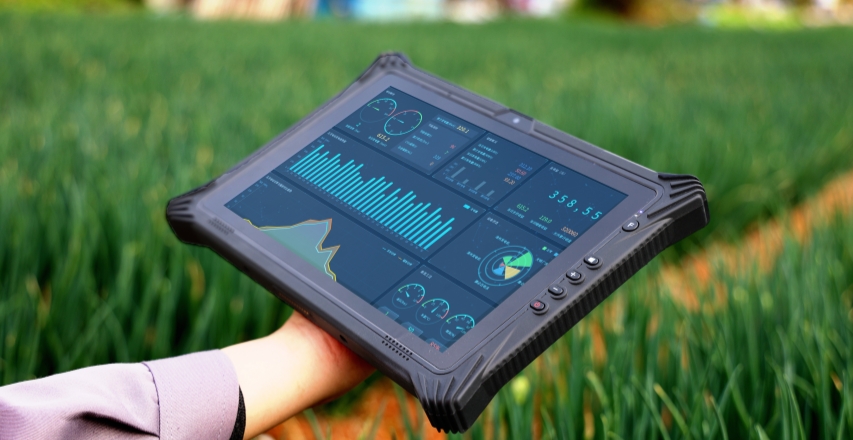
Field Data Collection in Wet or Dusty Utility Environments with IP65 Sealing
IP65 isn’t overkill — it’s baseline reliability for outdoor utility work. The '6' means total protection against dust ingress; the '5' guarantees resistance to low-pressure water jets from any direction. Unlike consumer tablets that shut down after a brief downpour or fail after months of airborne particulates in a pump station, IP65-certified units keep running through routine washdowns, roadside inspections, and unsheltered pole-top assessments. No gasket replacement cycles. No annual seal integrity checks. Just consistent operation where it matters most: at the asset, not back in the office.
Why Glove-Touch Response Matters More Than Screen Resolution
Field crews rarely remove gloves — and never during winter outages or wet-weather repairs. A tablet that requires bare-finger precision defeats its own purpose. Real-world usability hinges on responsive capacitive layers calibrated for gloved interaction, not just lab-tested sensitivity. That’s paired with 1200-nit brightness — enough to read live SCADA overlays or GIS layer toggles under midday sun beside a transformer bank. It’s not about peak contrast; it’s about legibility without shade-hatting or screen squinting.
For procurement managers evaluating long-term value, IP65 isn’t just a spec sheet checkbox — it directly reduces device attrition in high-turnover field roles. Fewer replacements mean fewer reimaging cycles, less MDM overhead, and tighter control over OS patch consistency across fleets. You’ll find this same durability foundation across rugged tablets deployed in household appliance service vans — another environment where moisture, grease, and vibration demand proven sealing, not marketing claims.

Maintenance Workflow Handoffs with Windows 10/11 Compatibility
Legacy CMMS and mobile EAM platforms still run on Windows — and many utilities aren’t migrating soon. That makes native Windows 10/11 support non-negotiable. Not ‘works with some drivers’ compatibility, but full plug-and-play integration with legacy USB peripherals (like barcode scanners for asset tagging), COM port emulation for older RTU interfaces, and seamless Group Policy enforcement. No driver hunting. No custom firmware updates just to talk to a decades-old valve controller.
Realistic Battery Life Expectations in Rotating Shifts
A 10-hour battery rating means little if the unit spends half its day charging in a truck cab between stops. What matters is consistent runtime across variable loads — GPS + cellular + Bluetooth + display at 800 nits — and predictable degradation over 18–24 months of daily charge cycles. Units designed for utility workflows prioritize thermal management and battery health reporting over headline Wh numbers. That translates to fewer mid-shift swaps and less dependency on vehicle-mounted chargers with inconsistent voltage regulation.
These same considerations apply whether you’re specifying hardware for industrial PC deployments in water treatment control rooms or rugged handhelds for meter reading rounds. Durability, OS alignment, and environmental resilience aren’t optional extras — they’re the operational floor. For more on how Onerugged builds on these fundamentals, visit Onerugged.


Comments
Post a Comment