Rugged Tablets for Warehouse Management with IP67 Sealing
Warehouse operations demand hardware that doesn’t pause for dust, spills, or accidental drops. When a tablet slips from a forklift operator’s gloved hand onto a concrete floor—or gets sprayed during sanitation cycles—the device must stay alive, responsive, and connected. That’s not theoretical resilience. It’s operational hygiene.
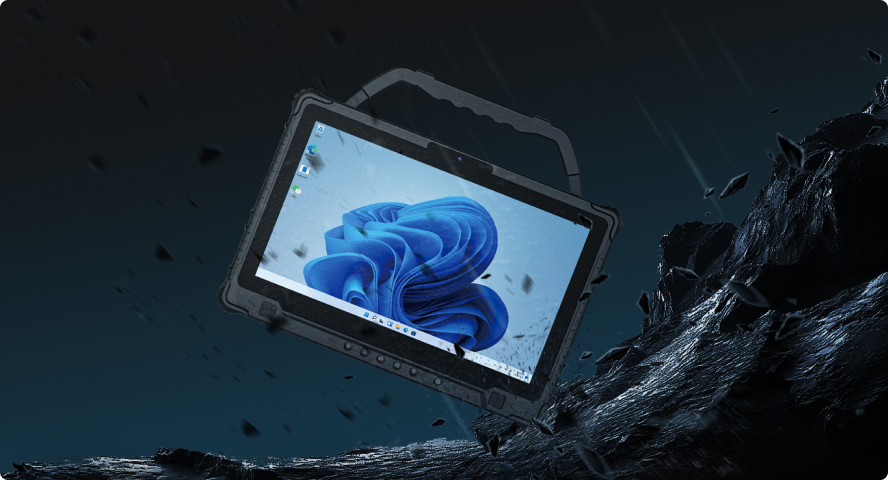
Warehouse Inventory Management with IP67 Sealing
IP67 isn’t just a rating—it’s a workflow enabler. In high-turnover distribution centers, moisture ingress comes from wet floors, condensation in cold-storage staging zones, or routine pressure-washing of workstations. A sealed enclosure prevents corrosion on internal connectors, avoids sensor drift in barcode scanners, and eliminates the need for scheduled downtime to dry out ports. Unlike consumer-grade tablets that fail after a single splash, Onerugged devices built to IP67 withstand full submersion up to 1 meter for 30 minutes—without compromising touchscreen responsiveness or battery integrity.
Why MIL-STD-810G Drop Testing Matters on Concrete Floors
Forklift operators, pallet jockeys, and cycle-count teams routinely handle devices while wearing thick gloves and moving at pace. A 1.2-meter drop onto unyielding concrete isn’t an edge case—it’s Tuesday. MIL-STD-810G certification means the chassis, display, and internal mounting have been validated across multiple orientations and surface types—not just lab-simulated foam drops. Real-world durability shows up in reduced field replacements and fewer ‘device unavailable’ incidents logged in WMS task queues.

Outdoor Loading Dock Operations with 1200-Nit Sunlight Readability
At loading docks, ambient light swings from overcast gray to midday glare—often within the same shift. A 400-nit display forces users to cup their hands or retreat into shade, slowing down receiving checks and manifest verification. At 1200 nits, text remains legible even under direct sun exposure, reducing squinting, misreads, and re-scans. This isn’t about brightness for brightness’ sake—it’s about sustaining visual accuracy without changing posture or location.
Glove-Touch Responsiveness in Cold-Storage Environments
Refrigerated and freezer dock areas add another layer: thick insulated gloves and low-temperature condensation on the screen surface. Capacitive touch fails here unless specifically tuned. Industrial-grade digitizers—like those in many rugged handheld terminals—respond reliably to gloved fingers down to -20°C, eliminating the need for stylus swaps or repeated tap retries during temperature-sensitive goods intake.
Field Mobility Support with Hot-Swappable Batteries
Shift-based warehouse labor rarely aligns with battery charge cycles. A non-removable 8-hour battery forces either mid-shift charging (disrupting pick paths) or overnight docking (delaying device availability for early shifts). Hot-swappable batteries let teams swap power in under 10 seconds—no tools, no reboot, no WMS disconnection. That continuity matters when real-time inventory sync is tied to shipping SLAs.
For deeper deployment insights, see our practical guide on rugged tablets for warehouse management. And if your environment includes mixed indoor/outdoor data capture where weather resistance is critical, review how rugged tablets for field data maintain uptime across seasonal transitions.


Comments
Post a Comment